If you’re missing one or more teeth and are looking into your replacement options, dental implants are worth understanding properly before you decide. Here’s what they actually are, how the process works, and how to think about whether they’re a fit for you.
This is general information, and every patient’s situation is different. Please contact your dentist or our team for guidance specific to you.
What is a dental implant?
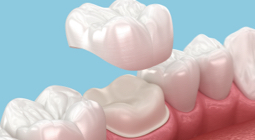
A dental implant replaces a missing tooth with two parts: a small titanium post that’s placed in the jawbone to act as an artificial root, and a custom-made replacement tooth (crown) that attaches to it. Because the post integrates with the jawbone, an implant functions and feels much closer to a natural tooth than a removable option.
How the implant process works, step by step
- Consultation and assessment — your dentist examines the site, reviews your jawbone health, and discusses your goals
- Implant placement — the titanium post is placed in the jawbone
- Healing period — the post needs time to integrate with the bone before it can support a crown
- Restoration — once healed, a custom crown is attached to complete the tooth
Timelines vary by case — your dentist can walk you through what to expect for your specific situation.
Single-tooth implants vs. All-on-4
Deerfoot Dental Centre offers both single-tooth implants (replacing one missing tooth) and All-on-4 implants (replacing a full arch of teeth using four implants as anchor points). Which one applies to you depends entirely on how many teeth you’re replacing — see our full comparison: Single-Tooth Implants vs. All-on-4: What’s the Difference?
Who dental implants are typically for
Implants are generally considered for patients who are missing one or more teeth and have (or can build, with additional treatment) enough healthy jawbone to support the implant. Overall health and gum condition also factor in. The only way to know for sure is a consultation — see Am I a Candidate for Dental Implants?
How implants compare to bridges and dentures
Implants aren’t the only tooth-replacement option — bridges and dentures are also common approaches, each with different trade-offs around permanence, feel, and how they interact with your remaining teeth. See our full comparison: Dental Implants vs. Bridges and Dentures: Which Is Right for You?
Explore the rest of this guide
Understanding implants:
- Dental Implants in Calgary: What They Are and How They Work (you’re here)
- Dental Implants vs. Bridges and Dentures
- Single-Tooth Implants vs. All-on-4
Deciding if it’s right for you:
Ready to talk it through? Book an appointment with Deerfoot Dental Centre in NE Calgary, or visit our Dental Implants page.
Frequently Asked Questions
Do dental implants look and feel like real teeth?
Yes — implants are designed to look, feel, and function like your natural teeth, since the crown is custom-made to match.
How long do dental implants last?
With proper care, implants are designed to be a long-term, durable solution — your dentist can speak to what to expect for your specific case.
Is getting a dental implant painful?
Your dentist will discuss comfort options with you before treatment — most patients describe the process as manageable and well-tolerated.
Do I need a healthy jawbone to get an implant?
You need enough bone to support the implant, but if you don’t have enough currently, that isn’t necessarily disqualifying — your dentist can discuss options at your consultation.