Once you’ve decided implants are worth exploring, the next question is usually which type applies to your situation. Here’s the difference between a single-tooth implant and All-on-4, and how that decision typically gets made.
This is general information, and every patient’s situation is different. Please contact your dentist or our team for guidance specific to you.
Single-tooth implants, explained
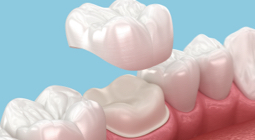
A single-tooth implant replaces one missing tooth: a titanium post is placed in the jawbone where the tooth is missing, topped with a custom crown once healed. It’s a targeted solution for a single gap, and doesn’t involve or affect your other teeth.
All-on-4, explained
All-on-4 replaces a full arch of missing or failing teeth using four implants as anchor points for a complete, fixed set of replacement teeth. It’s typically considered when a patient is missing most or all of their teeth in an arch, or has multiple failing teeth that would otherwise need extensive individual treatment.
What typically determines which one applies to you
- How many teeth are missing or affected — one tooth points toward a single implant; most or all of an arch points toward All-on-4
- Condition of your remaining teeth — if several teeth in an arch are failing or beyond repair, All-on-4 may be more practical than treating each individually
- Jawbone health — both options require sufficient bone, though All-on-4’s implant placement is planned to work with the bone that’s available across the arch
Can you start with a single implant and add more later?
This depends on your specific situation — some patients do have multiple single-tooth implants placed over time, while others with more extensive tooth loss are better served starting with a full-arch plan like All-on-4. Your dentist can advise on which approach makes more sense for your case, including long-term cost and treatment considerations.
How to find out which applies to your case
The only reliable way to know is a consultation, where your dentist reviews the number and condition of your missing or failing teeth along with your jawbone health, and recommends an approach.
Explore the rest of this guide
Understanding implants:
- Dental Implants in Calgary: What They Are and How They Work
- Dental Implants vs. Bridges and Dentures
- Single-Tooth Implants vs. All-on-4 (you’re here)
Deciding if it’s right for you:
Ready to talk it through? Book an appointment with Deerfoot Dental Centre in NE Calgary, or visit our Dental Implants page.
Frequently Asked Questions
Is All-on-4 more invasive than a single-tooth implant?
All-on-4 addresses a full arch in one treatment plan rather than several individual ones, so it’s a more involved procedure overall — but it’s often more efficient than treating multiple failing teeth separately. Your dentist can walk you through what’s involved for your case.
Does All-on-4 replace every tooth in my mouth?
All-on-4 refers to one arch (upper or lower) — patients needing both arches addressed would have All-on-4 planned for each.
Is All-on-4 removable like a denture?
No — All-on-4 is a fixed, non-removable set of replacement teeth anchored by four implants, unlike a traditional removable denture.
Which option costs more?
Cost depends on how many teeth are involved and which approach applies — see Dental Implant Cost in Calgary for what factors into an estimate, and talk to our team for a personalized quote.