If you’ve been reading about veneers and are wondering whether they’re actually right for you — and what getting them really involves — here’s a full walkthrough.
This is general information, and every patient’s situation is different. Please contact your dentist or our team for guidance specific to you. This page is meant to help you decide whether a consultation makes sense — not to diagnose you or confirm candidacy on its own.
Are veneers right for you?
Veneers tend to be a good fit for patients who want to change the shape, size, color, or appearance of specific teeth — chips, wear, minor gaps, or teeth that are naturally an uneven shape — without moving the teeth themselves. If your main concern is that your teeth are crowded or misaligned rather than their shape or shade, Invisalign more directly addresses that instead.
This isn’t a self-diagnosis checklist — here’s why
Whether veneers are the right treatment (versus whitening, Invisalign, or something else) depends on your specific teeth and goals — something only a dentist can properly assess in person. What follows are common reasons patients consider veneers, not a checklist to self-confirm against.
Patients typically consider veneers because they want to address:
- Chipped, worn, or uneven-looking teeth
- Teeth that are naturally an irregular shape or size
- Minor gaps between teeth
- Discoloration that whitening hasn’t fully resolved
If any of these sound like what you’re dealing with, that’s a reasonable enough reason to book a consultation and find out.
The process, step by step
- Consultation — your dentist reviews your teeth and goals to confirm veneers are the right fit, and discusses the number of teeth and material involved
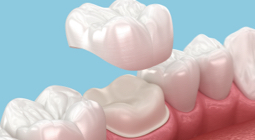
- Preparation — a small amount of enamel is typically removed from the teeth being treated, to make room for the veneer
- Custom fabrication — your veneers are custom-made to the shape, size, and shade agreed on at your consultation
- Placement — your veneers are bonded to your teeth and adjusted for a natural, comfortable fit
What the appointment itself feels like
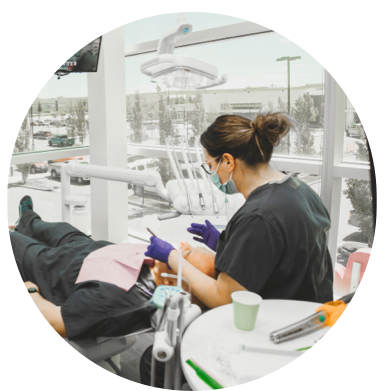
The preparation step involves removing a small amount of enamel, so your dentist will discuss comfort options with you beforehand. Placement itself is generally straightforward — your dentist checks the fit, color match, and bite before permanently bonding the veneers in place.
Caring for your veneers afterward
Veneers are cared for much like your natural teeth — regular brushing, flossing, and dental visits. Your dentist may also recommend a nightguard if you grind your teeth, since grinding can affect how long veneers last.
Explore the rest of this guide
Looking into Veneers:
- Our Veneers service page
- Veneers Cost in Calgary
- What to Expect Getting Veneers (you’re here)
Comparing your options:
Ready to talk it through? Book an appointment with Deerfoot Dental Centre in NE Calgary.
Frequently Asked Questions
Does getting veneers hurt?
Your dentist will discuss comfort options with you before the preparation step — most patients describe the process as straightforward, not painful.
How many appointments does it take?
Typically more than one — an initial consultation, then preparation and fabrication, followed by a placement appointment. Your dentist can confirm an exact timeline for your case.
What if I decide veneers aren’t right for me after all?
That’s completely fine — your dentist can talk through other options, like whitening or Invisalign, depending on what you’re actually trying to change.
Can I get veneers on just my front teeth, or does it have to be a full set?
Most patients treat only the specific teeth they want changed — a full set isn’t required unless that’s the look you’re going for.
—