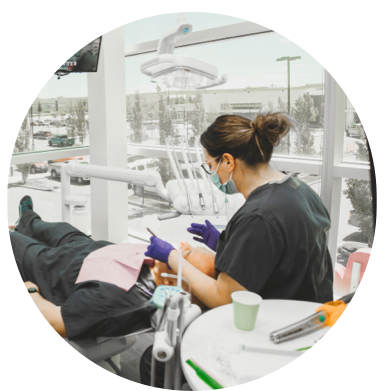

Once TMJ disorder is confirmed, the next question is usually “okay, so what actually happens now?” Treatment isn’t one-size-fits-all — it depends on what’s driving your symptoms, how severe they are, and what’s worked (or hasn’t) so far. Here’s a walkthrough of the options we may recommend.
This is general information, and every patient’s situation is different. Please contact your dentist or our team for guidance specific to you.
How your dentist decides what to recommend
Treatment usually starts conservative and only escalates if needed. A dental exam — including checking your bite and looking for wear patterns from grinding or clenching — helps identify what’s contributing to your symptoms, which shapes which of the options below makes sense for you. Many patients see meaningful improvement from the more conservative options alone.
Nightguards and bite splints
For many patients, a nightguard (also called a bite splint) is the first line of treatment. Wearing one while you sleep helps the jaw muscles relax and reduces the strain caused by grinding or clenching overnight — often the biggest hidden contributor to TMJ symptoms. It’s non-invasive, custom-fitted, and one of the most common starting points we recommend.
Physical therapy and self-care
For milder cases, self-care measures can meaningfully ease symptoms:
- Relaxation techniques to reduce jaw clenching tied to stress
- Gentle jaw massage and stretching exercises
- Avoiding hard or sticky foods that overwork the joint
- Applying warm or cold compresses to ease muscle tension
These are often recommended alongside a nightguard rather than as a standalone fix, especially if stress is a contributing factor.
Botox for TMJ
Botox injections are one of the treatment options we may recommend for TMJ disorder. Botox helps relax the jaw muscles responsible for clenching and grinding, which can ease pain and tension around the joint — it’s particularly useful for patients whose TMJ symptoms are driven largely by muscle tension rather than joint damage. This is a therapeutic use of Botox for jaw-muscle relaxation, not a cosmetic treatment.
Other options for more severe cases
For TMJ disorder that doesn’t respond to the above, or that’s tied to arthritis or a structural issue with the joint, other approaches may be discussed at your consultation. Since these are less common and more individualized, they’re best talked through directly with your dentist based on your specific exam findings.
What treatment usually looks like, start to finish
Most patients start with a nightguard, self-care, or Botox — sometimes a combination — and follow up to see how symptoms respond before considering anything more involved. It’s a process, not a single fix, and your dentist will check in with you along the way to adjust the plan if needed.
Curious what it actually costs, or whether you’re a good candidate to begin with? Those are covered here:
- Am I a Candidate for TMJ Treatment? Signs You Shouldn’t Ignore
- How Much Does TMJ Treatment Cost in Calgary?
Explore the rest of this guide
Just starting to figure out what’s going on:
- TMJ Disorder: Symptoms, Causes & When to See a Dentist
- Am I a Candidate for TMJ Treatment? Signs You Shouldn’t Ignore
Looking into treatment:
- TMJ Treatment Options in Calgary: Splints, Physical Therapy, Botox & More (you’re here)
- How Much Does TMJ Treatment Cost in Calgary?
Ready to book:
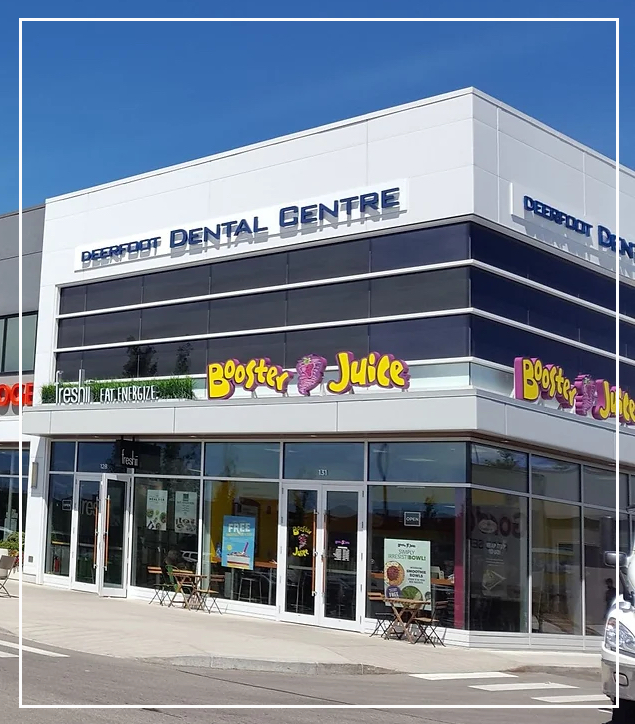
Ready to talk it through? Book an appointment with Deerfoot Dental Centre in NE Calgary.
Frequently Asked Questions
Is Botox for TMJ the same as cosmetic Botox?
The injection itself is the same product, but the purpose is different — for TMJ, Botox is used therapeutically to relax the jaw muscles responsible for clenching and grinding, not for cosmetic wrinkle reduction.
Do I need a nightguard forever once I start using one?
Not necessarily — some patients use one long-term as a preventive habit, while others find their symptoms improve enough that ongoing use isn’t needed. Your dentist can advise based on how your symptoms respond.
How long does it take to know if a treatment is working?
It varies by treatment and by patient — nightguards and self-care measures often show improvement over a few weeks, while your dentist will advise on a realistic timeline for other options at your consultation.
Can I combine treatments, like a nightguard and Botox?
Yes — treatments are often combined based on what’s driving your symptoms. Your dentist will recommend a plan tailored to your exam findings.
—